
Mira · doubt
"Tell me how that is fair. He did everything right."
Episode 06 · Watch
The Man Who Lost Everything
A good man loses everything in a single day. He is never told why, and he will not let go of God.

Though he slay me, yet will I trust in him.Job 13:15
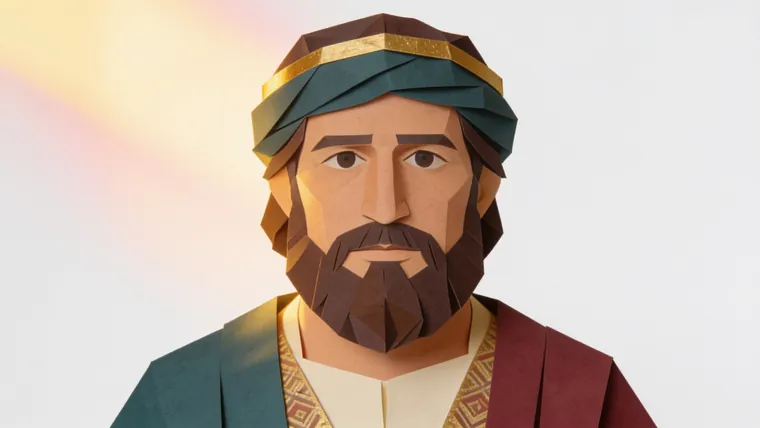
Job is blameless, wealthy, and devout. In a heavenly court he never sees, his faith is questioned, and in one day he loses his children, his wealth, and his health. His friends sit silent, then start to blame him. Job aches, argues, and holds on.
Mira doubts. Tov trusts. The show lives in the space between them.
"Tell me how that is fair. He did everything right."

"Even in the ashes, he never stops talking to God."
Every beat of the film, in order, with the frame that carries it.
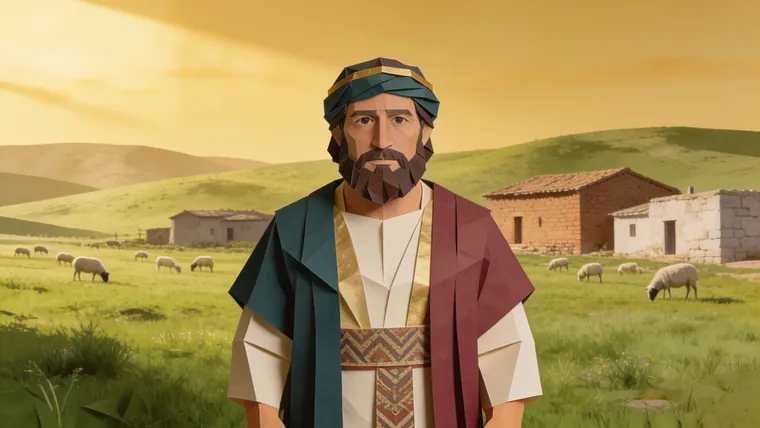
The man who lost everything
Mira and Tov: tell me how that's fair
Who was Job?

The unseen court
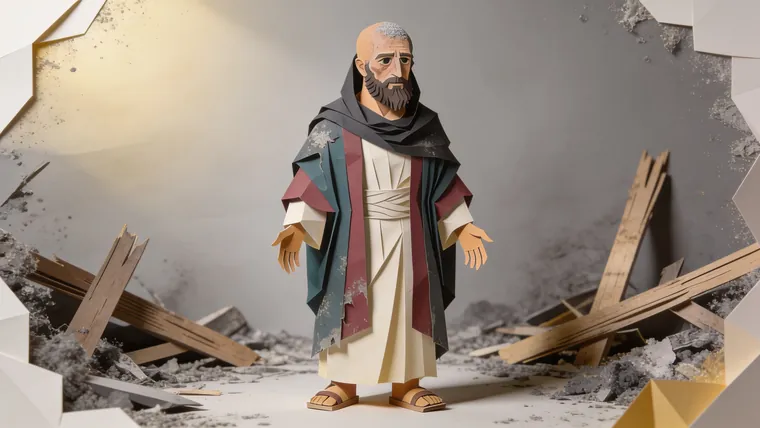
Four disasters in one day

The LORD gave and the LORD hath taken away
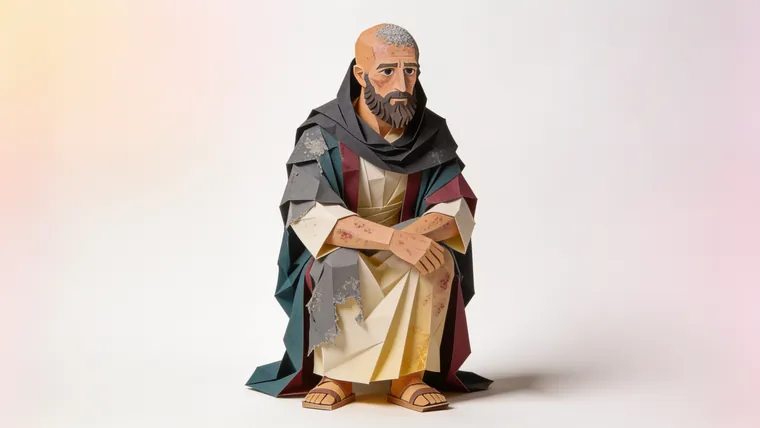
Boils, and "curse God and die"
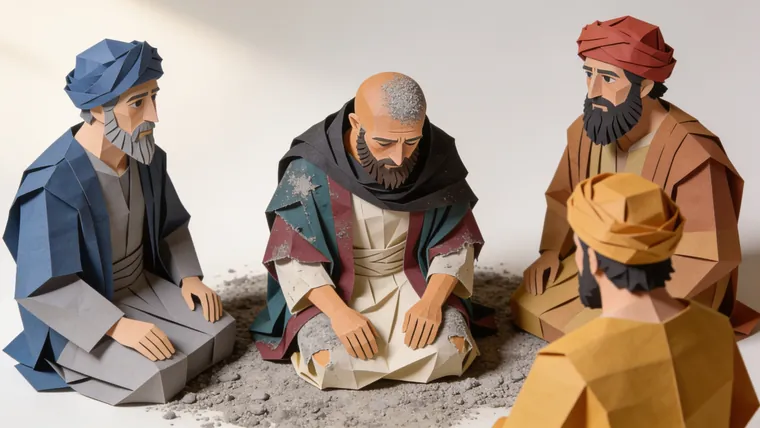
The friends, and "though he slay me"
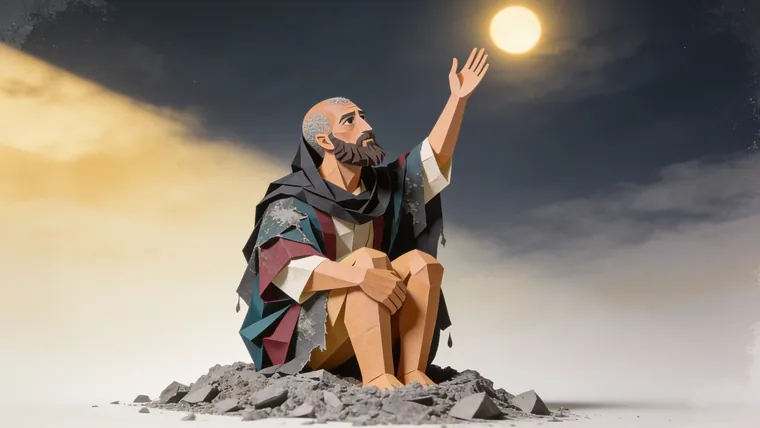
I know that my Redeemer liveth

Behold the Lamb of God
Quoted line for line from the King James Version.
Hast thou considered my servant Job, that there is none like him in the earth, a perfect and an upright man, one that feareth God, and escheweth evil?
Behold, all that he hath is in thy power.
I only am escaped alone to tell thee.
Naked came I out of my mother's womb, and naked shall I return thither: the LORD gave, and the LORD hath taken away; blessed be the name of the LORD.
In all this Job sinned not, nor charged God foolishly.
Dost thou still retain thine integrity? curse God, and die.
shall we receive good at the hand of God, and shall we not receive evil?
Though he slay me, yet will I trust in him.
For I know that my redeemer liveth, and that he shall stand at the latter day upon the earth ... yet in my flesh shall I see God.
Everything for this story in one place. Pick where to start.
Small details that pay off later. The gold marks are seeds the ending grows from.
Job was perfect and upright, one that feared God and eschewed evil
The angels/sons of God came to present themselves before the LORD, and Satan the accuser came among them (the unseen courtroom Job never sees)
Pays off → The whole test is permitted, not random, Job is never told why
Hast not thou made an hedge about him? (the accuser's charge: Job only loves God for the perks)
In one day: Sabeans take the oxen/asses, fire of God burns the sheep, Chaldeans take the camels, a great wind kills all his children, each messenger: 'I only am escaped alone to tell thee'
Job worshipped: Naked came I out of my mother's womb, and naked shall I return; the LORD gave, and the LORD hath taken away; blessed be the name of the LORD
In all this Job sinned not, nor charged God foolishly
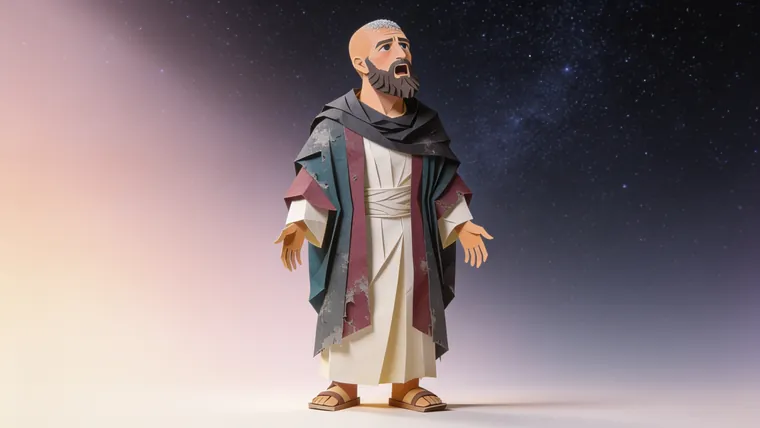
Painful sores from the sole of his foot to the crown; he took a broken piece of pottery to scrape himself; and sat in the ashes
His wife: Dost thou still retain thine integrity? curse God, and die
What? shall we receive good at the hand of God, and shall we not receive evil?
Eliphaz, Bildad and Zophar came to mourn with him; they sat with him seven days and seven nights, and none spake a word, for they saw his grief was very great
Though he slay me, yet will I trust in him (faith that outlasts the friends' bad counsel)
For I know that my redeemer liveth, and that he shall stand at the latter day upon the earth... yet in my flesh shall I see God
Pays off → The grace landing, the Redeemer is Jesus
All 9 quoted spans were verified word for word against the King James Version, then read for fairness and reverence before a single frame was made. Mira & Tov are companions in a dramatized retelling, not people from the Bible.

From the ash heap Job reaches for a Redeemer who "liveth" (Job 19:25). That Redeemer is the One who came: Jesus.
Job's wife says "curse God, and die." Job says "blessed be the name of the LORD." Be honest: which one would you have been that day? Mira still isn't sure. Part 2 is where God finally speaks.
Short answers, straight from the King James Version.
The story never tells Job why, and that is part of the point. But it does show us the scene Job could not see. It was Satan who accused him, and Satan could touch nothing without leave: 'Behold, all that he hath is in thy power; only upon himself put not forth thine hand' (Job 1:12). And it was God who called Job 'a perfect and an upright man' (Job 1:8), meaning blameless and honest, not sinless. Job's suffering was never proof that God had stopped loving him. The book lets us sit where Job sat, not knowing why, still trusting the God who does.
No. When the first wave of loss came, his answer was 'the LORD gave, and the LORD hath taken away; blessed be the name of the LORD', and 'In all this Job sinned not' (Job 1:21-22). When his health went too and his own wife said, 'curse God, and die' (Job 2:9), he answered, 'shall we receive good at the hand of God, and shall we not receive evil? In all this did not Job sin with his lips' (Job 2:10). Job did grieve fiercely after that; he even cursed the day he was born (Job 3:1). Honest grief and real faith can live in the same heart.
Sitting in the ashes with everything gone, Job says the most hopeful line in the book: 'For I know that my redeemer liveth, and that he shall stand at the latter day upon the earth ... yet in my flesh shall I see God' (Job 19:25-26). A redeemer is the family member who steps in to buy you back when you cannot save yourself. Job trusted that his living Redeemer would stand on the earth at the last, and that even after death he would see God in his own flesh. Christians have long heard that hope answered in Jesus, who stood on the earth, died, and rose.
Their main claim was wrong. They treated Job's suffering as proof of hidden sin: own up, and the pain will stop. Some of their lines sound true on their own, but they aimed them at the wrong man, and they made God out to be a machine that pays good for good and pain for sin. At the end of the book God speaks for Himself, His wrath kindled against them: 'ye have not spoken of me the thing that is right, as my servant Job hath' (Job 42:7). Their real error was about God, not just about Job. That does not make every word of Job's a model either; God's own answer settles the book. The friends' speeches are in the Bible so we can hear them answered, not so we can copy them.
Short, vertical cuts, each built around one verse.

In the Book of Job, Job's wife said the breaking words: "Dost thou still retain thine integrity? curse God, and die." (Job 2:9)

Ruined, sitting in ashes, with no answer from God, Job said a hope that still sounds impossible: "For I know that my redeemer liveth, and that he shall stand at the latter day upon the earth... yet in my flesh shall I see God." (Job 19:25-26)
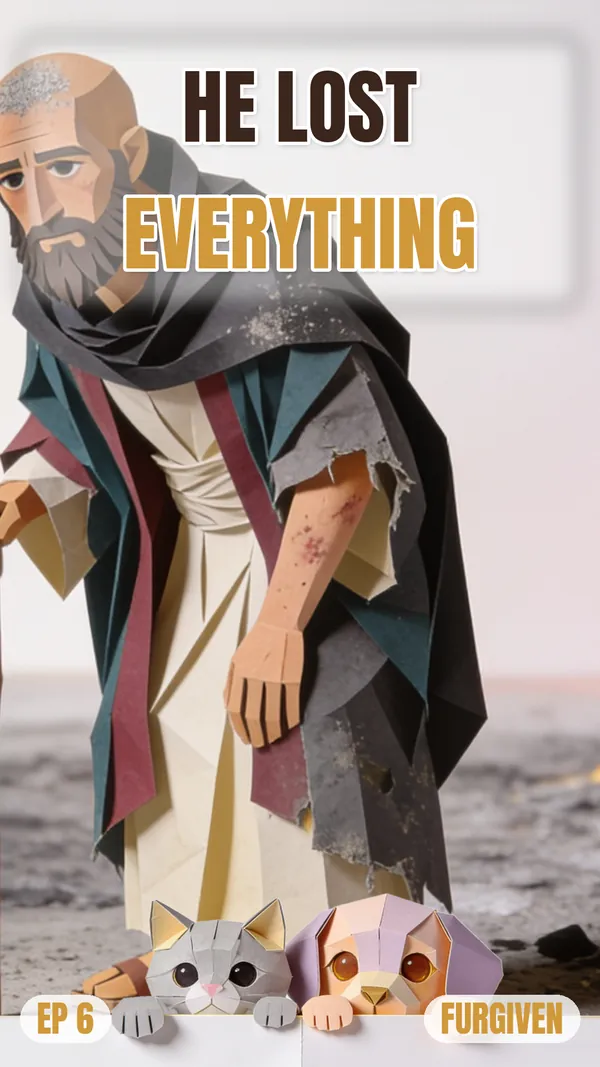
Job lost his wealth and all ten of his children in a single day, and he fell down and worshipped.