
Mira · doubt
"Pray for them? After everything they said to him? I would not."
Episode 08 · Watch
My Redeemer Liveth
God gives it all back, but only after Job does the hardest thing: pray for the friends who broke him, and meet the Redeemer he had hoped for in the dark.

For I know that my redeemer liveth.Job 19:25
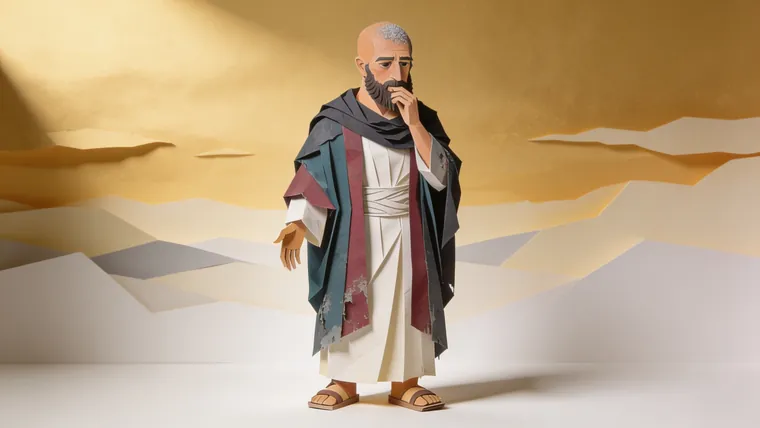
The storm is over, and God turns to Job's three friends. They had a tidy theory: you suffer, so you sinned. God says they had Him wrong, and the honest doubter spoke rightly. Then comes the hinge the whole book swings on. Before God hands Job back a single thing, He sends the friends to be prayed for, and Job, who had every reason to curse them, lifts his hands for them instead. The blessing that follows is not a wage for his pain. It is a free gift. And the cry Job once whispered in the ashes, that his Redeemer lives, turns out to be a name.
Mira doubts. Tov trusts. The show lives in the space between them.
"Pray for them? After everything they said to him? I would not."

"I know. That is exactly why it is the turn."
Every beat of the film, in order, with the frame that carries it.

He gives it all back, but first
Mira and Tov: something better, and harder
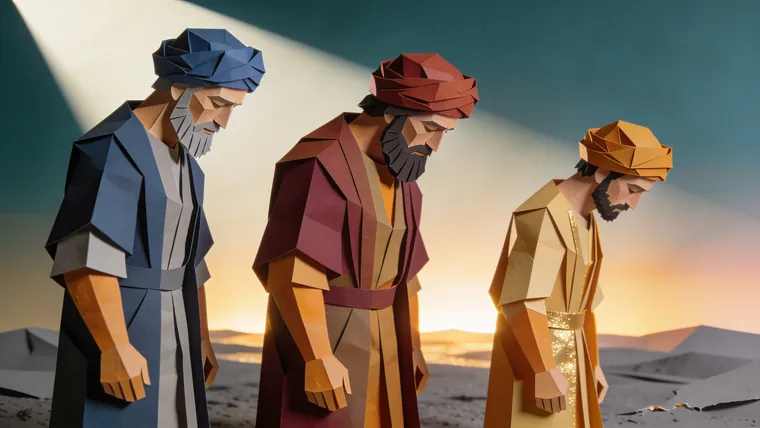
The friends had God wrong

Seven bullocks and seven rams
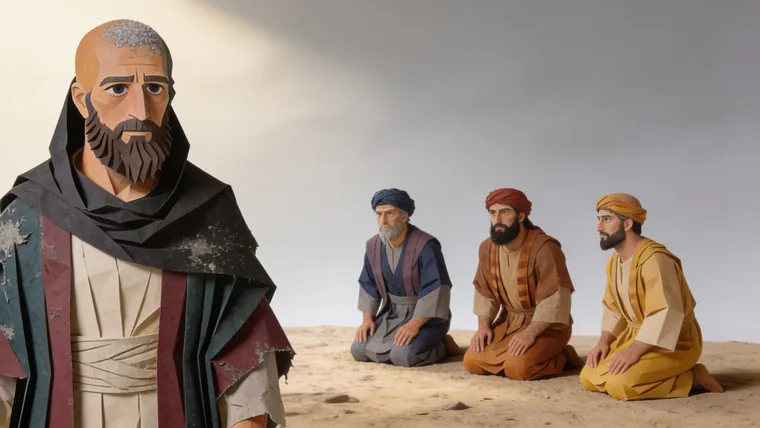
The turn: pray for the men who wronged you
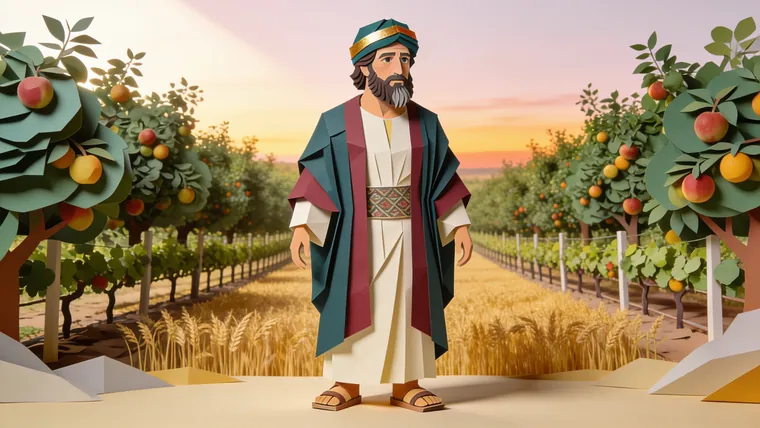
The LORD turned his captivity
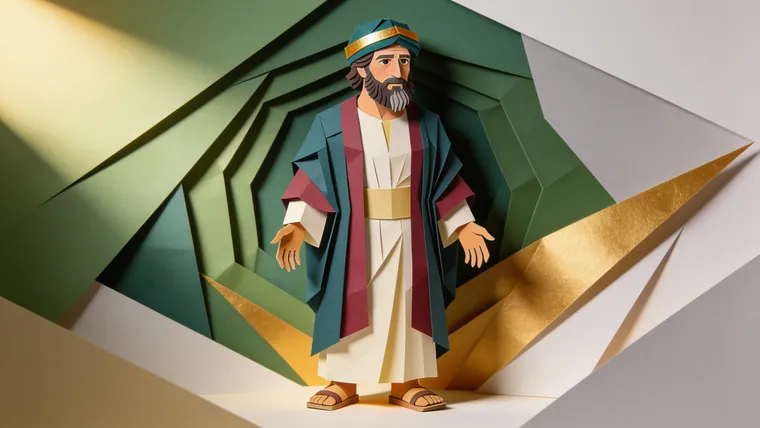
Blessed more than his beginning
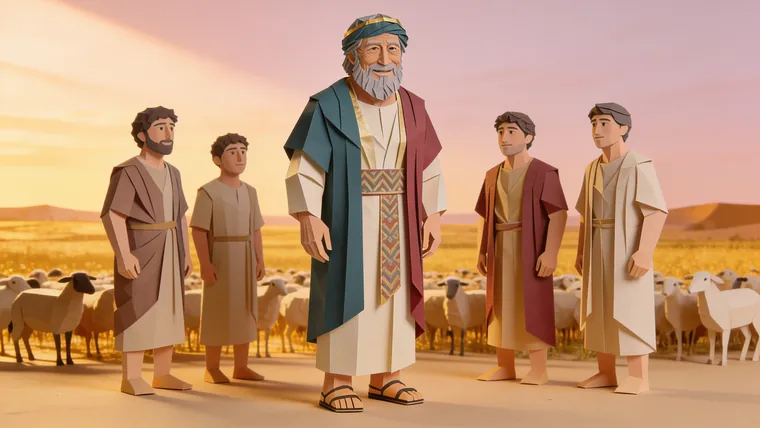
Old, and full of days
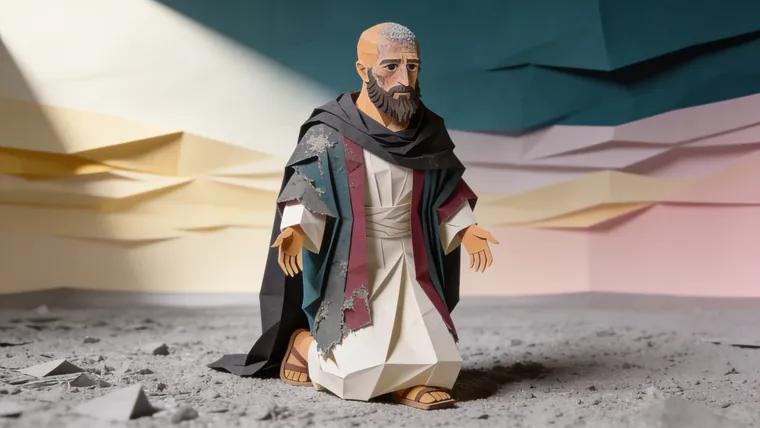
I know that my Redeemer liveth
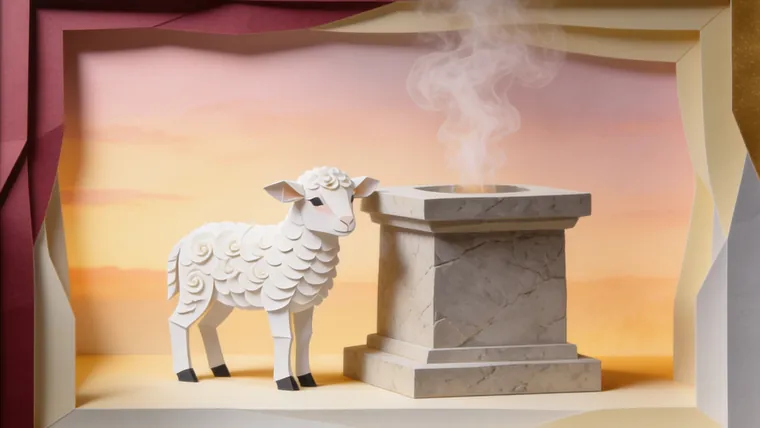
Behold the Lamb of God
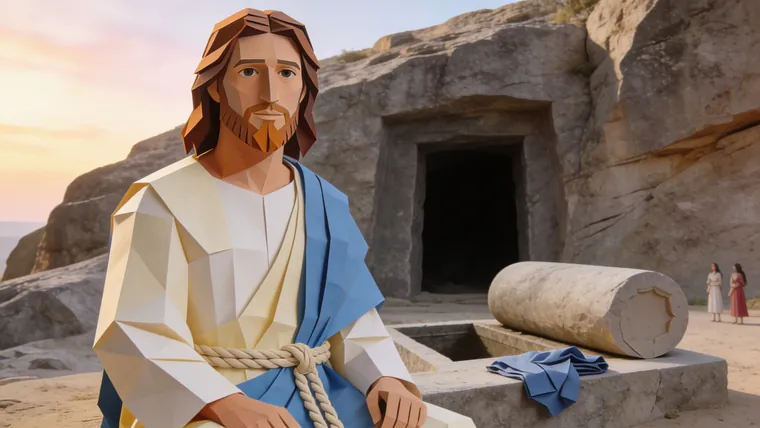
I am the resurrection and the life
Quoted line for line from the King James Version.
My wrath is kindled against thee, and against thy two friends: for ye have not spoken of me the thing that is right, as my servant Job hath.
Therefore take unto you now seven bullocks and seven rams, and go to my servant Job, and offer up for yourselves a burnt offering; and my servant Job shall pray for you: for him will I accept
And the LORD turned the captivity of Job, when he prayed for his friends: also the LORD gave Job twice as much as he had before.
So the LORD blessed the latter end of Job more than his beginning ... He had also seven sons and three daughters.
After this lived Job an hundred and forty years, and saw his sons, and his sons' sons ... So Job died, being old and full of days.
For I know that my redeemer liveth ... yet in my flesh shall I see God.
Behold the Lamb of God, which taketh away the sin of the world.
ye were not redeemed with corruptible things, as silver and gold ... But with the precious blood of Christ, as of a lamb without blemish and without spot
I am the resurrection, and the life
Everything for this story in one place. Pick where to start.
Small details that pay off later. The gold marks are seeds the ending grows from.
My wrath is kindled against thee, and against thy two friends: for ye have not spoken of me the thing that is right, as my servant Job hath (the men who defended God had Him WRONG; the honest doubter spoke rightly)
Seven bullocks and seven rams + a burnt offering + Job shall pray for you (a blood offering and a wronged man's prayer -- a small shadow of the Lamb to come)
The LORD turned the captivity of Job, WHEN HE PRAYED FOR HIS FRIENDS -- mercy walking toward the men who wronged him (the hinge the whole book swings on; a gospel echo)
Pays off → Forgiveness of enemies foreshadows Christ
Twice as much as he had before; seven sons and three daughters -- FENCED in narration: a free gift not a wage, and the lost children NOT erased (love never works by replacement)
After this lived Job an hundred and forty years, saw his sons' sons; so Job died, being old and full of days (he carried the first graves to the end -- no longer crushed)
For I know that my redeemer liveth... yet in my flesh shall I see God (Job ached for an innocent one to stand between him and God and buy him back)
Pays off → The grace landing -- the Redeemer is Jesus
The voice from the whirlwind (the Maker, Part 2) is the very One who came to buy him back -- the Creator and the Redeemer are one Christ (the P2<->P3 seam payoff)
Pays off → Ties Part 2 (Christ the Creator) to Part 3 (Christ the Redeemer)
Behold the Lamb of God, which taketh away the sin of the world (the sacrifice Job's burnt offering only shadowed)
Not redeemed with corruptible things, silver and gold, but with the precious blood of Christ, a lamb without blemish and without spot
I am the resurrection, and the life -- the words Job could only reach for; the Redeemer liveth because He walked out of His own grave, and out of ours
Pays off → Job's ashes-cry becomes a living name
All 9 quoted spans were verified word for word against the King James Version, then read for fairness and reverence before a single frame was made. Mira & Tov are companions in a dramatized retelling, not people from the Bible.
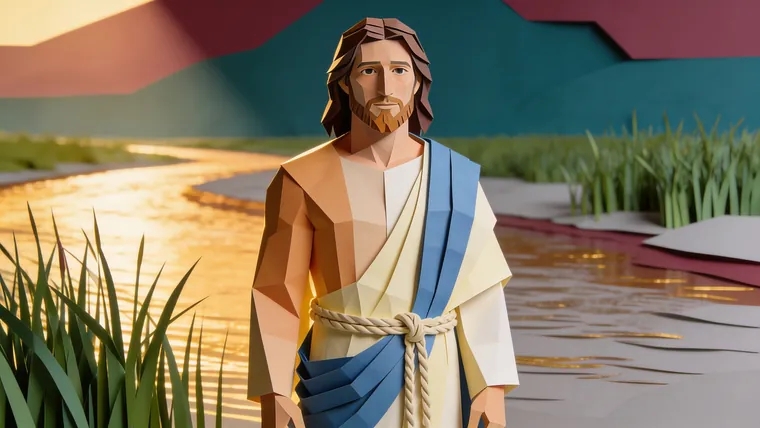
And so Job's cry in the ashes stopped being a hope whispered in the dark. It became a name. I know that my Redeemer liveth, because He walked out of His own grave, and out of ours.
Before God gave Job a single thing back, Job had to pray for the friends who broke him. Could you pray for the people who hurt you most? Mira couldn't. Honest answers below.
Short answers, straight from the King James Version.
God's rebuke is sharp: "My wrath is kindled against thee, and against thy two friends: for ye have not spoken of me the thing that is right, as my servant Job hath" (Job 42:7). Their comfort had turned into accusation, insisting Job's suffering proved hidden sin, and that was wrong about God Himself. So God commands both: "take unto you now seven bullocks and seven rams, and go to my servant Job, and offer up for yourselves a burnt offering; and my servant Job shall pray for you: for him will I accept: lest I deal with you after your folly ..." (Job 42:8), burnt offerings for their folly in speaking wrongly of Him, and the very man they wronged sent to pray for them. Job prays for them, and right then his own hard circumstances begin to turn: "the LORD turned the captivity of Job, when he prayed for his friends" (Job 42:10).
The text presents it as gift, not payment: "the LORD gave Job twice as much as he had before" (Job 42:10), and "the LORD blessed the latter end of Job more than his beginning" (Job 42:12). His livestock is doubled; his children are not, the sons and daughters he lost are never replaced or undone, and God gives him seven sons and three daughters again (Job 42:13). The ending is not a neat ledger of everything restored. Job's prayer happens right when the story turns, but the book does not turn that "when" into a rule, it never promises that praying rightly buys back double what suffering takes. What happens next is God's grace to this one man, not a pattern to expect for every loss.
Long before the restoration, in the middle of his suffering, Job says: "For I know that my redeemer liveth, and that he shall stand at the latter day upon the earth: And though after my skin worms destroy this body, yet in my flesh shall I see God" (Job 19:25-26). Job does not name Jesus here, and readers have long debated the exact force of his words. But even facing his own death, Job trusts that a living redeemer, the near kinsman with the right to stand up for a wronged family member, will one day stand on the earth, and that Job himself will see God, "in my flesh," even after death has done its worst. Christians read that hope as fulfilled in Jesus, "the Lamb of God, which taketh away the sin of the world" (John 1:29): believers "were not redeemed with corruptible things, as silver and gold ... but with the precious blood of Christ" (1 Peter 1:18-19), who said of Himself, "I am the resurrection, and the life" (John 11:25).
Short, vertical cuts, each built around one verse.
📖 Full study, every verse in KJV: https://fur-given.com/episodes/05b3_job/

The friends spent the whole book telling Job he must have sinned. God's verdict: "Ye have not spoken of me the thing that is right, as my servant Job hath." (Job 42:7)

Back in the ashes, ruined and unanswered, Job said a hope that still sounds impossible: "For I know that my redeemer liveth ... yet in my flesh shall I see God." (Job 19:25-26)